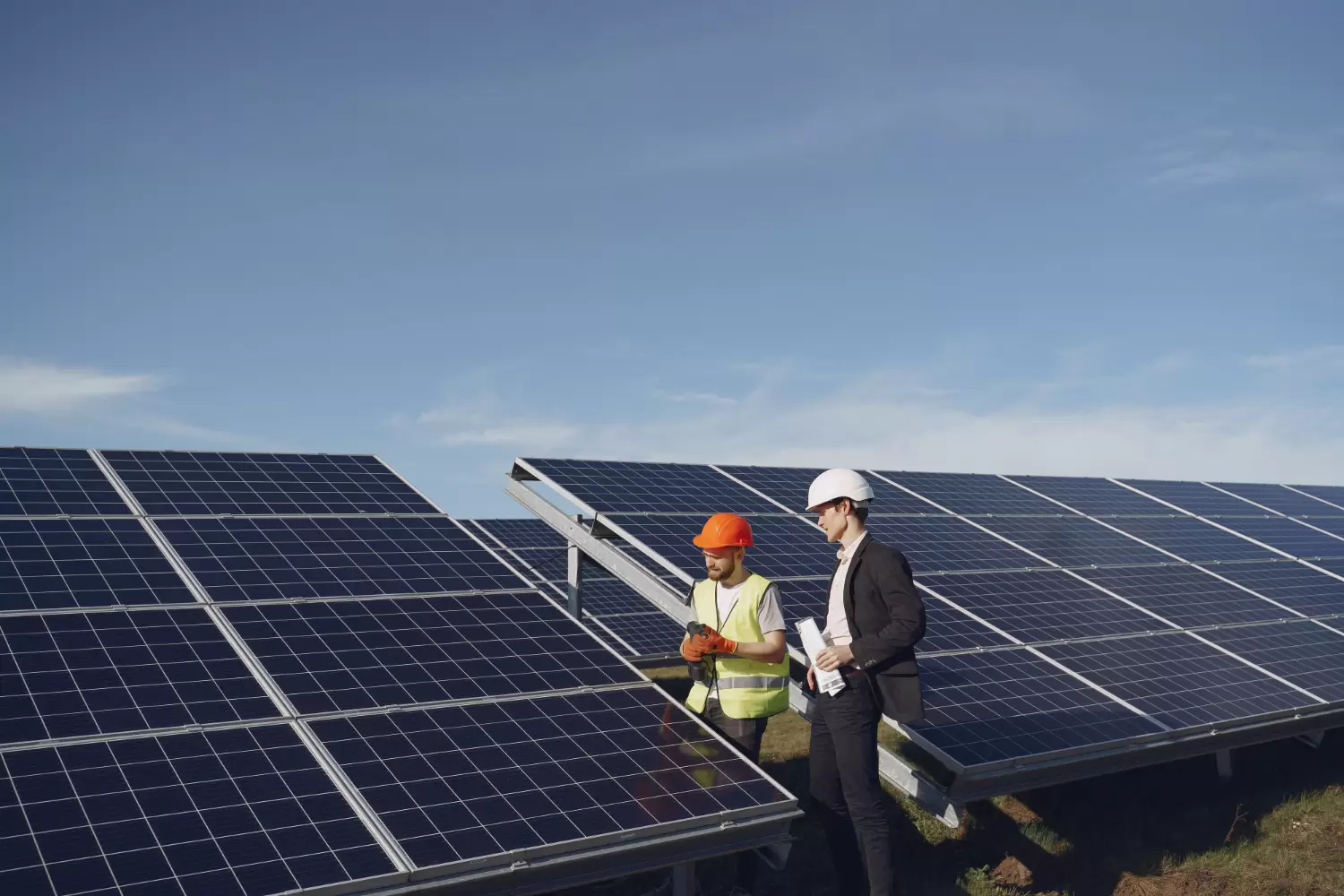
Solar equipment finance lets you install panels now and pay from what you save.
A warehouse in Welshpool running refrigeration units around the clock can spend $3,000 to $4,000 monthly on electricity. Solar panels reduce that bill by 50% to 70%, but the upfront cost for a commercial system sits between $20,000 and $60,000 depending on roof size and energy needs. Equipment finance spreads that cost across monthly repayments, meaning you install the system today and cover payments from the savings on your power bill.
The structure works because solar systems pay for themselves. You're not borrowing to buy something that sits idle. You're funding technology that cuts an existing expense from day one.
How chattel mortgage works for solar installations
A chattel mortgage is the most common structure for buying solar panels through finance. You own the equipment immediately, the lender holds security over it, and you make fixed monthly repayments over two to seven years. At the end of the term, you've paid off the system and own it outright.
Ownership from day one matters because solar panels qualify as plant and equipment. That means the full purchase price is tax deductible, either through instant asset write-off if your business is eligible, or depreciation over the system's effective life. You also claim the interest portion of each repayment as a business expense.
Consider a logistics business in Welshpool with a 15-kilowatt solar system costing $35,000. Financed over five years with a chattel mortgage, the monthly repayment might sit around $650. The business was already spending $2,800 monthly on electricity. After solar, that drops to $1,200. The net position is $1,200 in power plus $650 in repayments, totalling $1,850. The monthly saving is $950, and the business owns an asset that keeps generating after the loan finishes.
Why Welshpool businesses are well positioned for solar finance
Welshpool sits in Perth's industrial belt. Most properties have large roof areas with minimal shading, and businesses operate during daylight hours when solar generation peaks. Manufacturers, cold storage facilities, logistics companies, and trade businesses all run equipment that consumes power steadily throughout the day.
Lenders assess solar finance applications based on your business's ability to service the repayment, not the value of the panels themselves. The system becomes collateral, but what matters more is trading history, turnover, and whether your current expenses show you can manage the commitment. For established Welshpool businesses with consistent revenue, approval rates are high because the finance replaces an existing cost rather than adding a new one.
Tax deductions and how they reduce the real cost
Solar panels are classified as plant and equipment, which makes them fully tax deductible. If your business has an aggregated turnover under the instant asset write-off threshold, you can claim the full purchase price in the year you install the system. If you're above that threshold, you depreciate the asset over its effective life, which the ATO currently sets at 20 years for solar panels, though many accountants apply a shorter period based on the technology's practical lifespan.
The tax deduction doesn't change your repayment amount, but it reduces taxable income. A $40,000 solar system claimed in full through instant asset write-off saves $10,000 in tax for a business with a 25% tax rate. That $10,000 can go straight back into the business or cover several months of repayments.
Interest on the loan is also tax deductible, which makes the effective interest rate lower than the stated rate. A 7% interest rate costs closer to 5.25% after tax for a business in the 25% bracket.
Lease versus ownership structures
Most businesses purchasing solar panels use a chattel mortgage because ownership delivers the tax deduction. An operating lease or finance lease keeps the equipment off your balance sheet, but you're paying for the use of the system rather than buying it. At the end of a lease, you either return the equipment, refinance it, or pay a residual to take ownership.
Leasing makes sense if your business wants to upgrade technology every few years or if balance sheet management is a priority. For solar, it's less common because panels last 25 years and the technology is stable. Ownership through a chattel mortgage captures the full financial benefit and keeps things straightforward.
In our experience, businesses looking at solar equipment finance want the deduction and the long-term asset. A lease adds complexity without much upside unless your business structure has specific reasons to avoid ownership.
How lenders assess solar finance applications
Lenders treat solar panel purchases the same way they assess other commercial equipment finance applications. They'll want to see your business financials, typically the last two years of tax returns or financial statements, recent bank statements, and a quote for the solar system from an accredited installer.
The loan amount usually covers the full cost of the system, including installation. Some lenders will finance up to 100% of the invoice value, while others cap it at 80% and expect you to contribute the rest upfront. Your trading history and turnover determine which structure applies.
If your business is newer or your financials show irregular income, a lender might ask for a director's guarantee or additional security. That's not unusual for asset finance and doesn't mean the application won't proceed. It just shifts some risk back to you personally, which reflects the lender's assessment of the business's position.
What happens if your energy needs change
Solar systems are modular, so you can add panels later if your power consumption increases. The original loan stays in place, and you finance the additional capacity separately if needed. Most Welshpool businesses install a system sized to current usage rather than overbuilding for future growth, then expand once the payback is clear.
If your business relocates, solar panels can be removed and reinstalled at the new site, though the cost of doing that often exceeds the value of the panels themselves. It's one reason lenders ask about lease terms and business stability during the application. A business with a long-term lease or owned premises is lower risk than one on a rolling tenancy.
Comparing finance options from different lenders
Interest rates for solar equipment finance typically sit between 6% and 9%, depending on the lender, loan term, and your business's credit profile. Some lenders specialise in renewable energy and offer slightly lower rates because they understand the asset and its payback period. Others treat solar the same as any plant and equipment purchase, which can mean less flexible terms but faster approval.
When comparing finance options, look at the total repayment amount, not just the interest rate. A lower rate with higher fees or a longer term might cost more overall. Fixed monthly repayments make budgeting predictable, which matters when you're managing cashflow around seasonal revenue or lumpy expenses.
We regularly see businesses choose mid-tier rates with flexible terms over the lowest rate with strict conditions. A lender that lets you pay out the loan early without penalty or adjust repayment frequency gives you more control as your business changes.
Timing your purchase to maximise cash flow
Solar installations take four to eight weeks from quote to connection, depending on installer availability and network approval from Western Power. Finance approval usually takes a few days to a week, so the total timeline from application to generating power is around six to ten weeks.
If your business has a quiet period where cash flow is tighter, time the first repayment to start after revenue picks up. Most lenders will structure the loan so the first payment falls 30 to 45 days after settlement, which gives you a month of solar savings before the repayment begins.
Tax planning also plays a role. Installing the system before June 30 lets you claim the deduction in the current financial year, which might suit your business if you're carrying profit forward. Installing after July 1 pushes the deduction into the next year, which works if you're forecasting higher income ahead.
Approval happens faster than most businesses expect, and the savings start immediately.
Call one of our team or book an appointment at a time that works for you. We'll review your energy usage, discuss finance options from lenders across Australia, and help you structure a deal that fits your business needs. Solar equipment finance isn't complicated, and for most Welshpool businesses, the numbers make sense from month one.