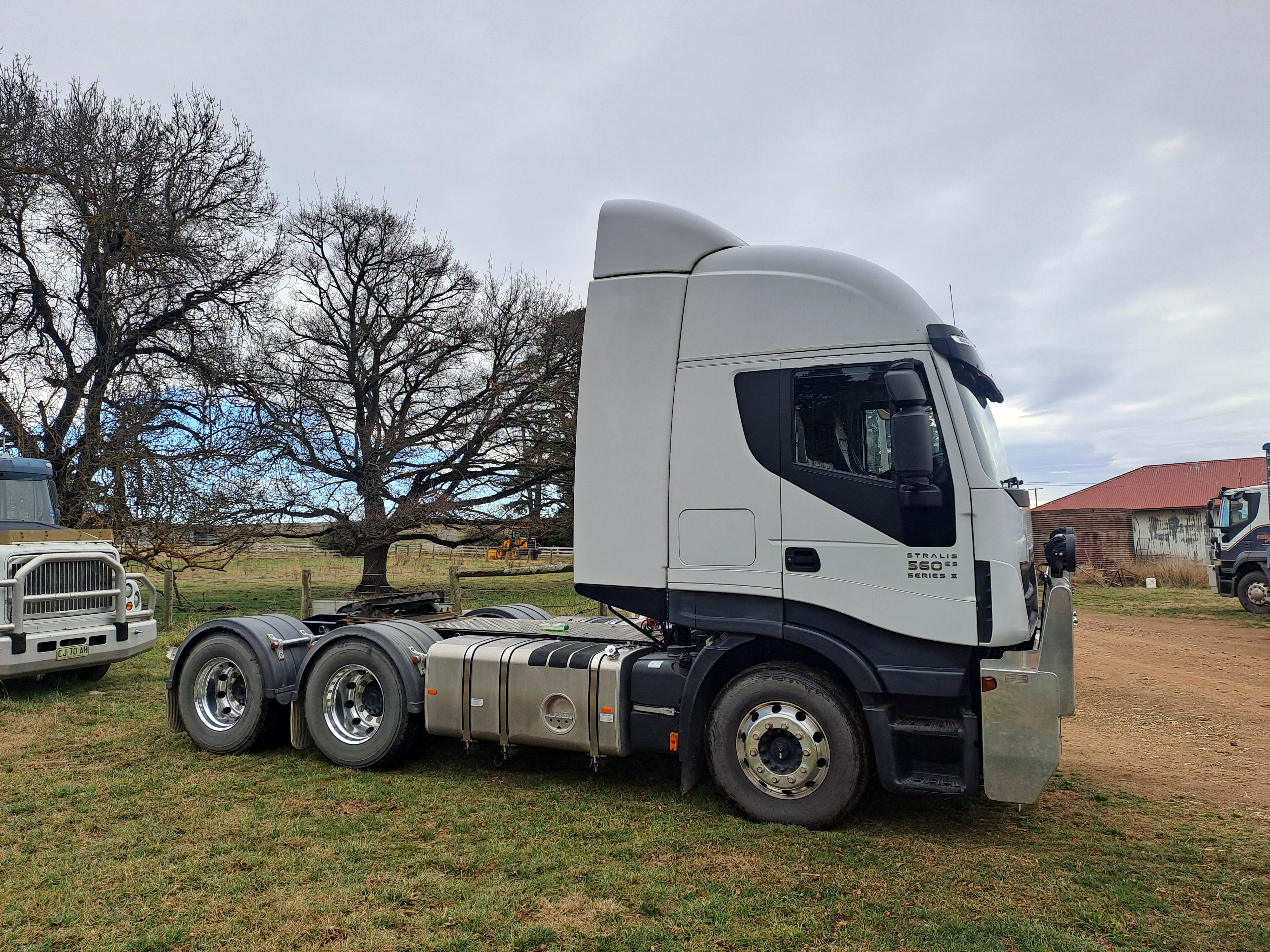
Buying a truck without comparing finance options first costs most Pinjarra operators thousands more than it should.
Pinjarra's mix of agricultural contractors, construction operators, and transport businesses means trucks here work hard across varied terrain. A finance structure that suits a tipper running between building sites around Mandurah won't necessarily work for a livestock carrier servicing farms south toward Harvey. Yet dealer finance gets signed at the yard without considering whether the repayment term, balloon amount, or GST treatment actually matches how that truck will be used and how the business manages its cash.
Signing Dealer Finance Without Comparing Lender Rates
Dealer finance is rarely the lowest-cost option available. Dealers add margin to the interest rate they offer, and that margin can push the cost well above what a broker can access through direct lender relationships. A tipper purchased through dealer finance at 8.5% might be available at 7.2% through a commercial lender, and over a five-year term that difference compounds.
Consider a buyer who finances a $120,000 tipper through the dealer at 8.5% over five years with a 30% balloon payment. Monthly repayments sit around $1,950, and the balloon at the end is $36,000. The same truck financed at 7.2% through a lender comparison drops monthly repayments to around $1,850, saving roughly $6,000 over the term before the balloon is even factored in. That saving comes purely from comparing rates before signing.
Dealer finance also locks you into a single lender's terms. If your business circumstances change or you want to refinance, the exit terms are often less flexible than a chattel mortgage arranged independently. Dealers don't explain this because their commission depends on you signing their paperwork.
Choosing the Wrong Balloon Payment Amount
A balloon payment reduces monthly repayments by deferring part of the loan to the end of the term. Set it too high and you create a cash problem when the term ends. Set it too low and you pay more interest over the life of the loan than necessary while tying up cash each month that could be used elsewhere in the business.
Pinjarra operators running seasonal work often misjudge this. A contractor doing civil works during the dry months might choose a 40% balloon to keep monthly costs down, but if the balloon comes due during a wet winter when work slows, refinancing or selling becomes the only option. That puts pressure on the business at exactly the wrong time.
The balloon amount should match your planned use for the truck at the end of the term. If you intend to trade it in and upgrade, a 30-35% balloon makes sense because it aligns roughly with the truck's residual value. If you plan to own it outright and run it into the ground, a lower balloon or none at all avoids the lump sum and means the truck is paid off when it's still working. The monthly repayment difference is often manageable if you budget for it from the start.
Overlooking Chattel Mortgage Tax Benefits
A chattel mortgage lets you claim the full GST upfront if your business is registered, and it allows depreciation deductions on the truck's value each year. Many operators don't realise the GST is reclaimable in the next Business Activity Statement, which means the effective purchase price drops immediately.
Depreciation works differently depending on the truck's cost. Instant asset write-off thresholds change, but for trucks over that threshold, you depreciate the value over the truck's effective life. For a heavy rigid truck, that's typically seven to eight years. A $120,000 truck depreciated over seven years gives you roughly $17,000 in deductions per year, reducing taxable income and therefore tax paid. That deduction continues every year you own the truck, not just in the year you buy it.
A hire purchase structure doesn't give you the same upfront GST benefit because you don't technically own the truck until the final payment. For Pinjarra operators who are GST-registered and want to claim depreciation from day one, a chattel mortgage is almost always the better choice. Dealer finance paperwork often defaults to hire purchase because it's simpler for the dealer to process, not because it's better for you.
Underestimating Running Costs When Setting the Loan Amount
The loan amount should cover the truck, but operators often forget to factor in immediate running costs like insurance, registration, and any modifications needed for the work the truck will do. Financing the truck and then scrambling to cover a $4,000 insurance bill in the first month puts pressure on cash that could have been avoided by building those costs into the finance from the start.
Pinjarra's rural location also means fuel and maintenance can be higher than in metro areas. A truck running long hauls to Perth or down to Bunbury will chew through more fuel and need servicing more frequently than one doing short local runs. If your monthly repayment doesn't leave enough room to cover those costs comfortably, you'll either defer maintenance or dip into working capital meant for other parts of the business.
When setting the loan amount, add at least 10-15% to the truck's purchase price to cover on-road costs, insurance, and any fitout. If you're buying a tipper and need a spray-on liner or toolboxes, include that. If you're buying a flatbed and need crane fitment, include that too. Financing these costs over the same term as the truck keeps your cash available and spreads the expense over the period you'll be using the equipment.
Ignoring Fixed Monthly Repayments in Volatile Rate Environments
Variable rate finance means your repayments change when the lender's base rate changes. For operators with tight margins, a rate rise of even 0.5% can push monthly costs beyond what the business can absorb without cutting elsewhere. Fixed monthly repayments lock in your rate for a set period, which means you know exactly what you'll pay regardless of what happens to the broader market.
In a scenario where a Pinjarra earthmoving contractor finances an excavator on a variable rate at 7.5%, a rate rise to 8.2% increases repayments by roughly $80 per month on a $100,000 loan. That might not sound like much, but across a fleet of three machines it's nearly $3,000 a year. If margins are already thin on tendered work, that cost either comes out of profit or forces price rises that make the next tender less competitive.
Fixed rates do cost slightly more upfront because the lender is taking on interest rate risk, but the certainty is worth it if your business can't absorb unexpected increases. Terms typically range from two to five years, and you can revert to variable once the fixed period ends if rates have stabilised.
Skipping Pre-Approval Before Negotiating Price
Walking into a yard without pre-approval means you're negotiating price without knowing your budget. Pre-approval through a broker gives you a confirmed loan amount and interest rate, which means you can focus on negotiating the truck's price rather than whether you can afford it. Dealers also take cash buyers more seriously, and a pre-approval is treated the same way because the dealer knows the finance is already arranged.
Pre-approval also speeds up settlement. If you find the right truck and the dealer has another buyer circling, having finance ready means you can move quickly. In Pinjarra's commercial vehicle market, where stock turns over fast and specific configurations sell within days, that speed can be the difference between securing the truck or missing it.
The process takes a few days if your financials are current. A broker will ask for recent tax returns, a profit and loss statement, and details of any existing debt. Once pre-approval is confirmed, it's usually valid for 90 days, which gives you time to find the right truck without pressure.
Signing paperwork at the yard feels convenient, but it usually means paying more and getting less flexibility than you would by arranging finance beforehand. Compare options, match the structure to how your business operates, and make sure the monthly cost leaves room for the actual work the truck needs to do. Call one of our team or book an appointment at a time that works for you.