Buying new equipment for your business shouldn't mean emptying your savings account.
Whether you're expanding a construction operation near the Murray River, upgrading medical equipment in one of Pinjarra's healthcare practices, or replacing work vehicles for a service business, asset finance lets you spread the cost across the life of the equipment while preserving working capital for wages, stock and unexpected expenses.
What Asset Finance Actually Covers
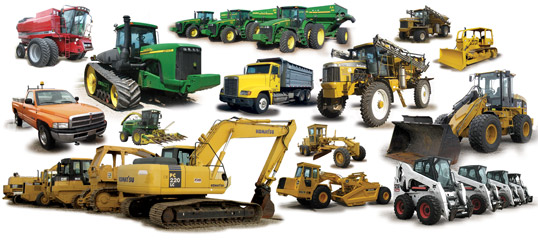
Asset finance applies to any physical item your business uses to generate income. This includes work vehicles like utes and vans, trucks and specialised machinery such as excavators and tractors for agricultural operations common around Pinjarra and the Peel region, office and medical equipment, hospitality fit-outs, and technology hardware. The loan amount is typically secured against the equipment itself, which often means more accessible terms than unsecured business loans.
Consider a landscape contractor purchasing a secondhand excavator for $85,000. Rather than withdrawing that amount from their business account during peak season when cashflow covers payroll and materials, they structure finance over four years with fixed monthly repayments of around $2,100. The excavator generates income immediately through contracted work, while the business retains capital for day-to-day operations and can manage unexpected equipment repairs or seasonal gaps in revenue.
Chattel Mortgage vs Hire Purchase
A chattel mortgage means you own the equipment from day one, with the lender holding security over it until the loan is repaid. You claim depreciation and interest as tax deductions, and if your business is registered for GST, you can claim the GST component upfront on the purchase price. This structure suits businesses with strong cashflow looking to maximise tax benefits.
Hire Purchase places ownership with the lender until your final payment, at which point the equipment transfers to you. You claim a deduction for the portion of each payment attributed to the equipment's decline in value. The key difference appears in your balance sheet and how quickly you access tax deductions, not necessarily in the total cost. Both options typically allow a balloon payment at the end, reducing your monthly commitment if you plan to trade or refinance.
Finance Lease and Operating Lease Structures
A finance lease keeps the equipment off your balance sheet while you use it. At the end of the lease term, you typically have options to purchase the equipment for a residual value, refinance that residual, or return it and upgrade. Monthly payments are generally tax deductible as a business expense. This approach suits businesses that want to upgrade equipment regularly without dealing with disposal of older items.
An operating lease functions more like long-term rental. You pay for the use of equipment during the lease period, return it at the end, and the payments are treated as an operating expense. This works when you need equipment for a specific project duration or want to avoid ownership risks like obsolescence in rapidly evolving technology.
For a medical practice in Pinjarra upgrading diagnostic equipment worth $120,000, a finance lease over five years might deliver monthly payments around $2,500 while preserving $120,000 in working capital. The practice claims the full monthly payment as a deduction, maintains flexibility to upgrade when newer models arrive, and doesn't tie up capital that could fund additional staff or practice expansion.
GST Treatment and Timing
Under a chattel mortgage or hire purchase, if you're GST registered, you claim the full GST on the purchase price in your next Business Activity Statement, even though you're financing the cost. This provides an immediate cashflow benefit. The GST on interest payments is claimed as you incur them.
With a lease arrangement, GST is built into each monthly payment and claimed progressively across the lease term. This spreads the GST claim rather than receiving it upfront. The structure you choose should align with your cashflow patterns and whether an immediate GST refund or steady monthly deductions serves your business better.
Dealer Finance and Vendor Finance
When you're quoted finance at the dealership, you're often looking at dealer finance arranged through the manufacturer's finance arm or a panel of lenders the dealer works with. While convenient, these arrangements sometimes carry higher interest rates than you'd access independently. The advantage is speed and bundled pricing on equipment and finance together.
Vendor finance comes directly from the equipment supplier, common with imported machinery or specialised technology where the vendor wants to make purchasing more accessible. Rates vary widely, and terms may be less flexible than traditional lenders. Before committing, compare the effective interest rate and total repayable amount against what you could access through a broker who can present your application to multiple lenders.
Preserving Capital for Business Growth
The case for financing equipment instead of purchasing outright becomes clearest when you map out where that preserved capital could work harder. If you're a builder in Pinjarra quoted $95,000 for a truck and trailer, paying cash means $95,000 leaves your account immediately. Financing that same amount over three years at a realistic rate might cost an additional $12,000 in interest and fees, but that $95,000 stays available.
If your business earns a margin of 25% on projects, having that capital available to take on additional work could generate $23,750 in profit over the same period. The equipment still generates income, your cashflow remains intact for wages and materials, and the interest cost is tax deductible. The calculation shifts if you're financing at unusually high rates or your business earns minimal margin, but for most profitable operations, preserving working capital outweighs the finance cost.
How We Connect You With Lenders Across Australia
Freo Finance provides access to asset finance options from banks and specialist lenders across Australia, which means we're not limited to a single lender's rates, criteria or appetite for your industry. A commercial kitchen fit-out carries different risk profiles than fleet finance for delivery vehicles, and lenders price accordingly. By presenting your application to multiple lenders, we identify which ones view your business favourably and compete for your work.
This matters particularly for businesses in regional areas like Pinjarra, where some lenders apply postcode-based criteria or hold conservative views on certain industries. We've worked with agricultural contractors, construction businesses, medical and dental practices, hospitality operators, and service businesses throughout the Peel region, and we know which lenders understand these industries and how to position your application.
Call one of our team or book an appointment at a time that works for you.